“AI is a mirror of our own minds. By building it, we are discovering what it means to be human.”
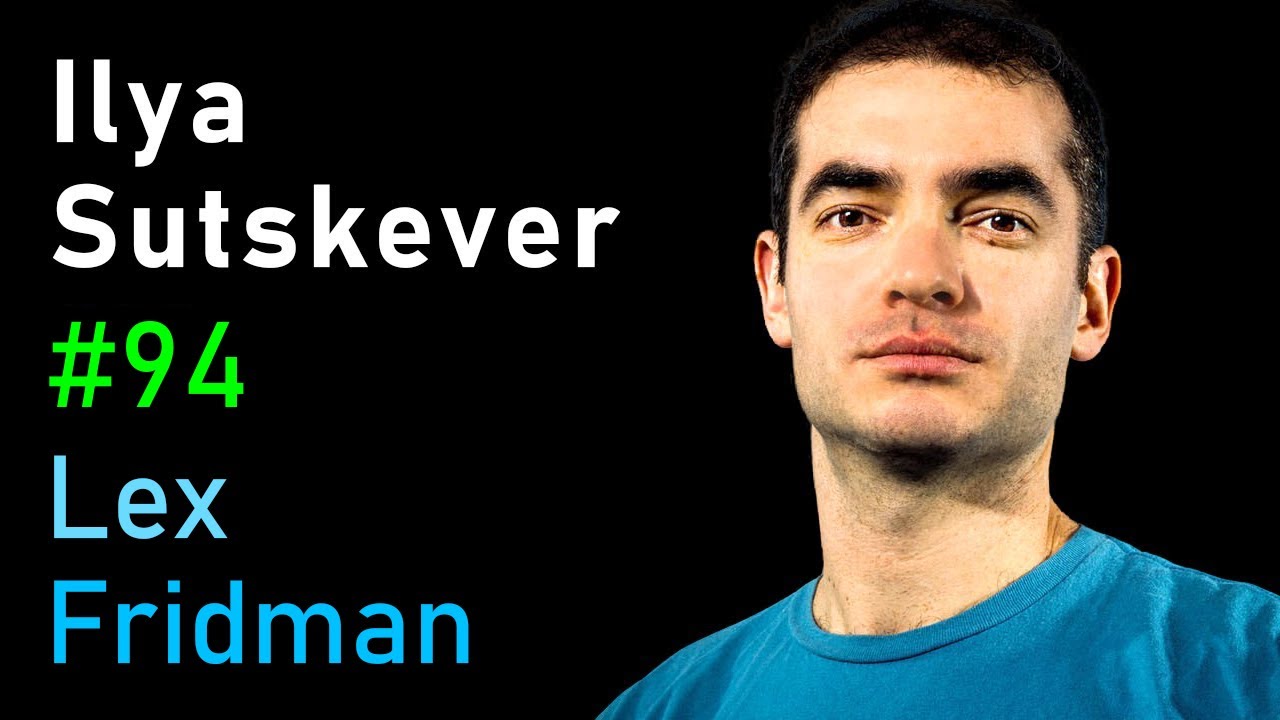
Imagine being in the year 2012. The world of computer vision believed that neural networks were an academic dead end. But one young researcher, driven by a profound conviction and the intuition that the human brain was the existence proof that neural circuits can solve anything, decided to bet everything.
That man was Ilya Sutskever. Alongside Alex Krizhevsky and Geoffrey Hinton, he published the AlexNet paper, the Big Bang that started the current Deep Learning revolution.
The Lesson of Conviction: Where Intuition Meets Data
In his celebrated conversation on the Lex Fridman Podcast, Ilya reveals something fundamental: technique is important, but conviction is the real engine of discovery. He did not merely follow equations; he looked at the hardware (GPUs) and the scale of the data (ImageNet) and realized that intelligence was an emergent property of scale.
For the aspiring researcher, Ilya’s message is clear:
- Do not underestimate the power of neural networks.
- They are not just engineering tools; they are the meeting point between the physics of computation and the biology of the mind.
From Researcher to Architect of the Future
Ilya did not limit himself to the safety of academia. As a co-founder of OpenAI, he crossed the barrier between theory and global impact. He participated in the creation of GPT, AlphaStar, and helped refine the Transformer, proving that the modern researcher must also be an entrepreneur of ideas: someone who builds the systems that change the trajectory of civilization.
The journey of Ilya teaches us that diving into AI is about participating in the construction of a maestro that learns to decide what matters in a sea of noise.
Path of Excellence: How to Dive Deep
If you wish to leave the surface and, as Ilya says, “move the pointer of the world,” here are the essential resources for your journey:
Fundamental Papers (The Pillars)
- Attention Is All You Need (2017): The birth of the Transformer architecture. Essential for understanding language.
- ImageNet Classification with Deep CNNs (AlexNet, 2012): Where the modern revolution began.
- Language Models are Few-Shot Learners (GPT-3): Understand how scale generates unforeseen capabilities.
Serious Books (The Theoretical Base)
- “Deep Learning” (Ian Goodfellow, Yoshua Bengio, and Aaron Courville): The indispensable technical bible.
- “Reinforcement Learning: An Introduction” (Sutton & Barto): To master the art of learning through trial and error.
- “The World as Will and Representation” (Schopenhauer): For those seeking the philosophical connection between will and intelligence.
Courses
- CS224N (Stanford): NLP with Deep Learning.
- CS231n (Stanford): Computer Vision and CNNs.
- Spinning Up in Deep RL (OpenAI): The practical guide from OpenAI for beginners in RL.
The field is open. The next great conviction that changes the world could be yours. Dive in.
Reflect: If intelligence is a mathematical certainty waiting for enough scale, what is the role of human intuition in guiding its creation?